
Shop With Crypto: The 5 Best Cryptocurrencies for Everyday Purchases


Many consumers still want Apple to accept crypto, while the cryptocurrency shopping world keeps growing fast. Right now, there are more than 2.2 million cryptocurrencies out there, and each serves its own purpose. This rapid growth shows that people now see digital currencies as payment methods rather than just ways to invest.
Crypto adoption has surged with a 99% CAGR from 2018 to 2023, and this has changed how we handle everyday purchases. The bigger picture of digital payments tells an interesting story – mobile payments jumped from US$31.5 billion in 2010 and should hit nearly US$998.5 billion by 2016. Crypto fans now turn to platforms like AppleCryptos that sells factory-sealed Apple products at great prices and ships free worldwide on orders over $100. On top of that, crypto payments complete within minutes or seconds, which makes them perfect for daily use.
But crypto transactions come with their share of risks. Their values can change substantially, so you need to choose your spending crypto carefully. In this piece, we’ll look at the best cryptocurrencies to shop with, where you can use them, and why they might reshape everyone’s buying habits.
Why more people are shopping with crypto
The digital currency world is changing faster from investment-focused to transaction-oriented. Major retailers like Apple haven’t fully adopted crypto payments, but digital currency shopping continues to gain momentum.
Crypto adoption is growing every year
The numbers tell a compelling story – global digital currency ownership has reached about 6.8%, and more than 560 million people own cryptocurrencies worldwide. Digital currencies have grown at an amazing rate of 99% yearly from 2018 to 2023. Traditional payment methods grew by just 8%. The number jumped 33% from 420 million in 2023, which shows how quickly people are adopting crypto.
Businesses are adapting to what customers want. About 46% of merchants now accept cryptocurrency payments, and 43% of e-commerce platforms support crypto payment options. Experts believe this trend will continue, and the global crypto market could reach USD 7.98 trillion by 2030.
Younger generations prefer digital assets
Millennials and Gen Z lead this shopping revolution. About 51% of Gen Z either own or have owned cryptocurrency, which is way higher than the general population’s 35%. American numbers show 51% of Gen Z owned crypto, while 49% of Millennials and just 29% of Gen X held digital currencies.
Young investors take crypto seriously. About 62% of Millennials keep at least a third of their portfolios in crypto. Gen Z goes even further – 35% put more than half their money in crypto.
They don’t just invest – they spend it too. Both Gen Z and Millennials see crypto as an investment and a way to pay for everyday things. Gen Z leads all age groups with 48% using online cryptocurrency exchanges. This shows how comfortable they are with digital payments.
Global access and borderless payments
Crypto’s borderless nature makes it popular for payments. Traditional banking can’t match these benefits:
- Crypto transfers take under five minutes while regular overseas payments need one to five business days
- Fees stay low – from a few dollars to tiny fractions of cents, unlike banks charging 0.5%-4% plus 1-5% for exchange rates
- Bitcoin’s value stays the same whether you’re in the United States or Argentina
These benefits change lives for millions who send money across borders. People make 87% of crypto transactions on mobile devices, which means digital currency payments work anywhere with internet.
While we wait for big retailers like Apple to accept crypto payments, people already shop with bitcoin and other cryptocurrencies through special services and payment gateways. The question isn’t if crypto shopping will become common – it’s about when it becomes mainstream.

Top 5 cryptocurrencies used for shopping
Crypto shopping has become mainstream, and specific digital currencies are now preferred payment options. About 8 in 10 crypto-consumers already use cryptocurrency to shop online or in-store. This shows the growing popularity of digital currency payments. Let’s get into the five most accessible cryptocurrencies people use for everyday shopping.
Bitcoin (BTC)
Bitcoin is the life-blood of crypto payments with a dominant 58.41% market share. People call it “digital gold” because BTC provides remarkable stability compared to other cryptocurrencies. This makes it ideal for larger purchases. Bitcoin trades at approximately $91,651 per coin as of November 2025 and offers:
- High liquidity and relative market stability
- Global recognition with the widest merchant acceptance
- Store of value characteristics that appeal to both consumers and businesses
Bitcoin’s transaction fees are higher and speeds are slower than newer networks. However, its reputation since 2009 has built exceptional trust among merchants. Many major retailers and service providers accept it, making Bitcoin the top cryptocurrency for everyday shopping.
Ethereum (ETH)
Ethereum ranks second with 11.93% market dominance. ETH trades around $3,095 per coin and balances value storage with practical utility for purchases. Ethereum stands out with these advantages:
- Extensive network that powers numerous decentralized applications
- Smart contract capability that enables advanced payment options
- Growing ecosystem of tokens and services built on its platform
Daily trading volumes for Ethereum regularly exceed $10 billion. The network recorded approximately 1.1 million unique active addresses in September 2025. These numbers show steady growth in consumer adoption for retail transactions.
Tether (USDT)
Tether leads the stablecoin market with a cap exceeding $183 billion. USDT provides significant stability for shopping as a dollar-pegged stablecoin:
- Price stability with 1:1 dollar backing
- Minimal volatility with fluctuations typically limited to 0.1-0.5%
- Cross-border utility without currency exchange concerns
USDT’s stability makes sense for everyday purchases where price predictability matters. USDT debit cards let people spend at millions of merchants worldwide through Visa and Mastercard networks. These cards offer 2-12% cashback compared to traditional cards’ 0.5-3%.
USD Coin (USDC)
USD Coin has become another leading stablecoin option with approximately $75.43 billion in circulation. USDC is fully backed by cash and cash-equivalent assets and provides:
- Regulatory compliance as the most licensed stablecoin globally
- Multi-blockchain compatibility with native issuance on 28 networks
- Integration with major platforms like Shopify through Coinbase’s Base protocol
More merchants now accept USDC for everyday purchases. The GENIUS Act provides greater clarity for businesses that accept USDC payments.
Litecoin (LTC)
People call Litecoin “digital silver” to Bitcoin’s “digital gold.” Shoppers benefit from these specific advantages:
- Faster transactions with 2.5-minute block times versus Bitcoin’s 10 minutes
- Lower fees due to reduced competition for block space
- Long-standing credibility with over a decade of network stability
Litecoin trades around $92.23 and over 100 major stores and companies accept it. Platforms like Overstock, Newegg, Travala, and numerous VPN providers make it especially useful for electronics purchases and digital services.
These five cryptocurrencies lead the way as mainstream retailers think over crypto payment adoption. Each offers unique advantages for different types of consumer transactions.
Where and how to shop with crypto
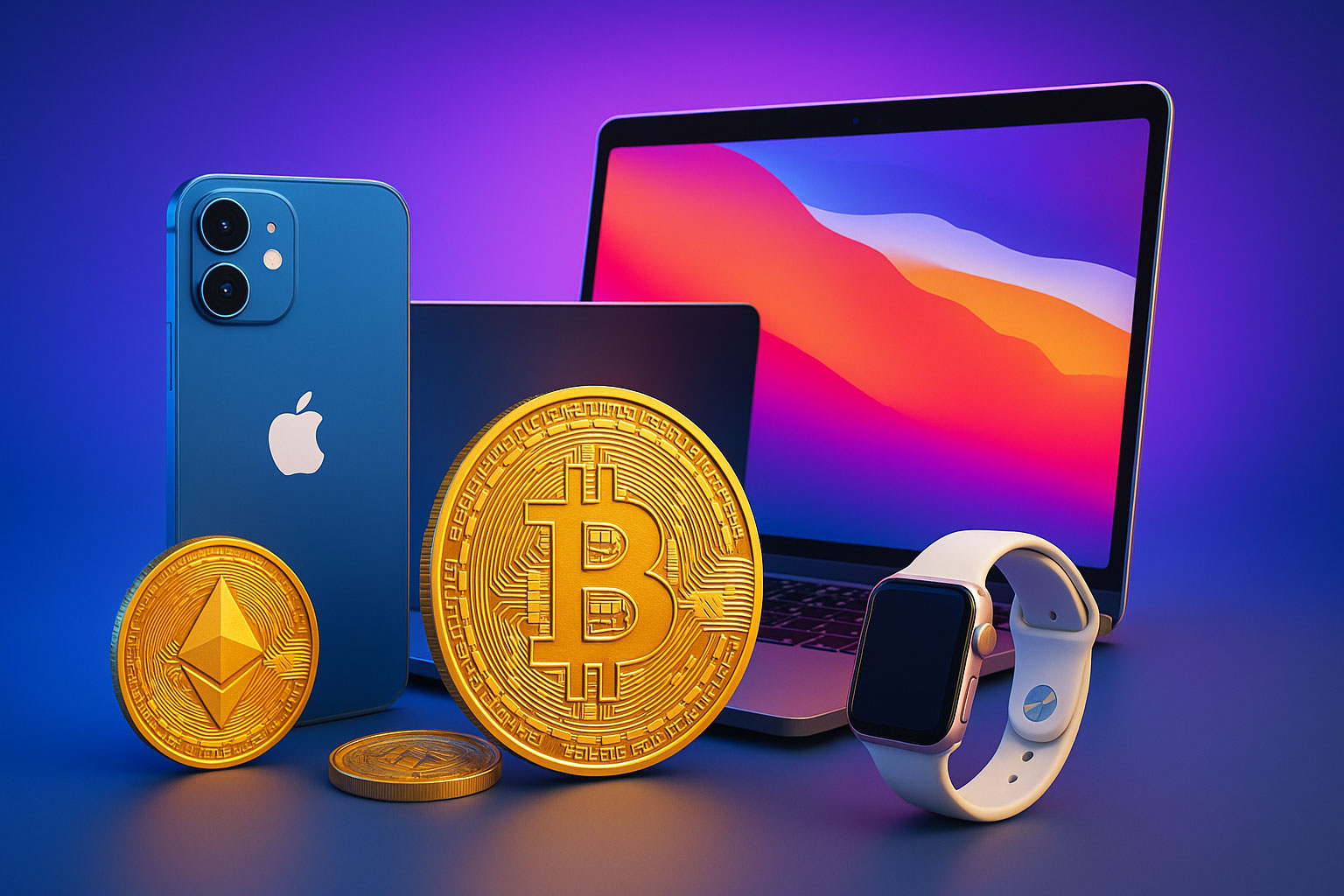
Digital assets make shopping easier than ever before. Consumers can now spend their favorite cryptocurrencies through dedicated platforms and trailblazing solutions that connect crypto wallets with traditional commerce.
Crypto cards and gift cards
Crypto cards serve as bridges between digital assets and everyday purchases.Users can buy everything from food to travel with cryptocurrency. Coinbase provides a similar solution with its Visa® prepaid debit card that turns regular purchases into crypto rewards without spending fees or yearly costs.
Gift cards give shoppers another great option. Bitrefill lets you buy gift cards from major retailers such as Newegg and Steam using Bitcoin, Ethereum, or stablecoins. Coinsbee delivers instant e-gift cards via email for brands like Apple and Google and accepts various cryptocurrencies.
Dedicated crypto stores like AppleBitcoins
Mainstream retailers haven’t fully embraced crypto payments yet, but specialized marketplaces fill this gap nicely. AppleBitcoins lets consumers buy Apple products using Bitcoin, Ethereum, Litecoin and other cryptocurrencies. The platform makes it easy to purchase iPhones, iPads, MacBooks, and accessories with digital assets.
Tech enthusiasts can also shop at CryptoBitMart or Apple Cryptos for smartphones and laptops. Newegg accepts Bitcoin directly for computer parts and gaming equipment.
Payment gateways like CoinPayments and BTCPay
Businesses need specialized payment gateways to handle cryptocurrency transactions. CoinPayments works as both a crypto payment gateway and wallet. Merchants can accept digital tokens and convert them to different coins or regular currency after payment. These gateways confirm crypto transfers between parties and work just like traditional online payment processors.
Buy electronics with crypto: popular categories
Electronics top the list of items people buy with cryptocurrency. The most popular categories include:
- PC components and gaming hardware from Newegg
- Mobile devices including iPhones through specialized platforms
- Entertainment systems and video game consoles via GameStop gift cards
- Home electronics from Best Buy gift cards purchased with crypto
Direct payments and gift card options make these purchases possible through various platforms.
Benefits of using crypto over fiat
Crypto payments have real benefits compared to traditional fiat currencies. Payment processors are exploring crypto integration, and these benefits drive wider adoption in retail sectors.
Lower transaction fees
Traditional payment networks usually charge merchants 1.5-3.5% in processing fees. International transfers can cost 2-7% when you add transfer fees, exchange spreads, and intermediary charges. Cryptocurrency transactions cost just a few cents. Stablecoin payments cost only 0.5-2% compared to traditional methods. This saves you money, especially for cross-border transactions. PayPal’s “Pay with Crypto” service charges just 0.99%, which is up to 90% cheaper than traditional cross-border card fees.
Faster payments
Speed is one of crypto’s biggest benefits. Traditional international transfers through systems like Swift take 3-5 days. Cryptocurrency networks complete transfers within seconds or minutes. Blockchain payments work 24/7, and transactions finish in under 3 minutes whatever the business hours or international boundaries. You get immediate access to funds, which eliminates the gap between sales costs and revenue collection.
Better privacy and security
Blockchain technology records all transactions on an immutable ledger, making fraud much harder to hide. Cryptographic algorithms and consensus mechanisms secure cryptocurrency transactions, which makes tampering almost impossible. Crypto addresses don’t link directly to user identities. You can make transactions without sharing personal information like names or addresses. Law enforcement benefits from blockchain’s traceability – they seized USD 225 million in fraud investigations thanks to blockchain visibility.
No currency conversion needed
Crypto removes currency exchange hassles for travelers and international shoppers. You don’t need to exchange euros for another currency, which helps you avoid high fees and bad exchange rates. One Bitcoin in America equals one Bitcoin in Argentina, creating true borderless commerce. Stablecoins let you buy things globally whatever your local currency limitations. They’ve become the only truly global currency working today.
Challenges and future of crypto shopping
Crypto payments are gaining popularity, but several challenges stand in the way before digital currencies become everyday shopping options.
Volatility and price swings
Cryptocurrencies’ wild price swings make everyday shopping difficult. Bitcoin’s value has dropped more than 50% eight different times. The price can jump or fall by 10% in just one day, even when markets seem stable. Merchants and shoppers find this uncertainty off-putting, which slows down wider adoption for daily purchases.
Limited direct acceptance by big brands
Bitcoin is accepted by roughly 15,000 businesses worldwide, with 2,300 in the United States. Most of these are small businesses. A 2022 Deloitte survey shows that 75% of retailers plan to accept cryptocurrencies by 2025. All the same, shoppers remain cautious – 41% say they won’t use cryptocurrencies to pay their bills.
Apple accepting crypto payments: is it coming?
Recent news suggests Apple might welcome cryptocurrency payments soon. Sources reveal that Apple has discussed integrating stablecoins with crypto companies since January 2025. They plan to partner with Mesh in Q2 2025. This will let people use Apple Pay‘s easy-to-use tap-to-pay system while automatically converting crypto to stablecoins.
How crypto shopping could evolve by 2030
Stablecoins offer the best path toward mainstream crypto shopping right now. The stablecoin market sits at $240 billion and could reach $2 trillion by 2028. Crypto payments might hit $47 billion by 2030. But widespread adoption needs solutions to technical and economic problems like scalability, privacy, and price swings.
Conclusion
Crypto shopping has transformed how we think about financial transactions. The cryptocurrency market shows an impressive 99% CAGR growth from 2018 to 2023, and its use goes well beyond investments into everyday payment solutions. More than half of Gen Z members own or have owned digital currencies, showing strong adoption among young people.
Stablecoins like Tether and USD Coin work best for daily purchases because their prices stay stable. Bitcoin, Ethereum, and Litecoin remain trusted payment options for retailers of all sizes. These digital assets give users clear benefits through lower fees, quick settlements, better privacy, and borderless transactions.
The economic effects reach way beyond personal convenience. Crypto payments cut out traditional banking inefficiencies, reduce middleman dependence, and help prevent currency manipulation risks. The growing ecosystem creates jobs in development, security, and customer service while promoting financial inclusion for unbanked people worldwide.
Some challenges still exist before crypto shopping becomes mainstream. Price swings make both merchants and shoppers hesitant. All the same, major retailers like Apple’s potential move into crypto payments shows a clear trend toward broader acceptance.
Crypto shopping’s future looks bright. As regulations mature and technology advances, we’ll see more stability, better interfaces, and smooth integration with current payment systems. Using cryptocurrency for payments could soon become as normal as using a credit card, changing forever our relationship with money in this digital age.
FAQs
Q1. Which cryptocurrency is most suitable for everyday purchases? Stablecoins like Tether (USDT) and USD Coin (USDC) are ideal for daily transactions due to their price stability. Bitcoin, Ethereum, and Litecoin are also popular options, each offering unique advantages for different types of purchases.
Q2. How can I use cryptocurrency for shopping? You can use cryptocurrency for shopping through crypto cards, gift cards, dedicated crypto stores, and payment gateways. Many platforms now offer ways to spend digital assets on everyday items, from electronics to travel expenses.
Q3. What are the benefits of using cryptocurrency over traditional currency for purchases? Cryptocurrency offers several advantages, including lower transaction fees, faster payments, enhanced privacy and security, and no need for currency conversion when shopping internationally.
Q4. Are major retailers accepting cryptocurrency payments? While many small businesses accept cryptocurrencies, adoption by major retailers is still limited. However, there’s growing interest, with 75% of retailers planning to accept crypto payments by 2025. Some companies already offer indirect ways to use crypto, such as through gift cards.
Q5. What challenges does cryptocurrency face in becoming a mainstream payment method? The main challenges include price volatility, limited direct acceptance by big brands, and the need for improved user interfaces. However, as technology advances and regulatory frameworks mature, these issues are expected to be addressed, potentially leading to wider adoption of crypto for everyday transactions.